Crude oil fell for a third consecutive session on Friday as traders gave more weight to the prospect of recovering Saudi supply and renewed diplomatic efforts. In Asian trading, West Texas Intermediate was near $96.40 a barrel. Brent later settled at $103.87, down almost 1%, according to Reuters. The retreat trims part of the recent geopolitical premium, but it does not yet signal a return to normal conditions.
Why prices are retreating
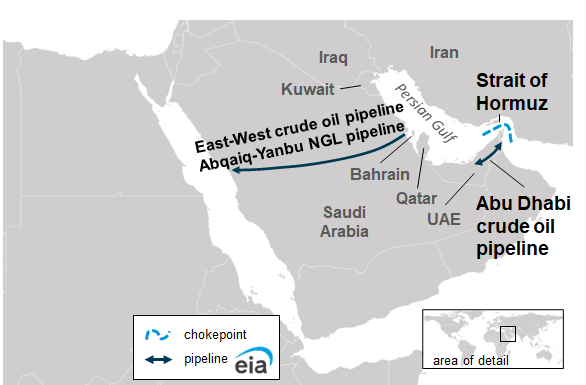
The immediate catalyst is the prospect that Saudi Arabia could restore more capacity on its East–West pipeline, which offers an alternative route to the Red Sea. China has also urged Iran to restrain the Houthis, supporting hopes that regional shipping risks may ease. Neither development guarantees a rapid normalization: the timing and sustainable throughput of any Saudi restoration remain uncertain, while diplomatic progress can reverse quickly.
The physical backdrop is still unusually tight. The U.S. Energy Information Administration estimated that petroleum-liquids flows through the Strait of Hormuz averaged 4.9 million barrels per day in the second quarter of 2026, down from 21.6 million in the fourth quarter of 2025. Flows through Bab el-Mandeb rose to 8.1 million barrels per day from 5.4 million, showing how strongly cargoes have been rerouted rather than how fully supply conditions have recovered.
What this means for investors
| Exposure | Potential effect | What matters next |
|---|---|---|
| Upstream producers | Prices above $100 can support cash flow, but a shrinking risk premium limits further upside. | Realized prices, production volumes and capital returns |
| Refiners | Results depend on product cracks, crude quality and logistics—not simply the headline oil price. | Crack spreads, feedstock availability and freight costs |
| Airlines and transport | Fuel costs remain a margin headwind even after the latest pullback. | Hedging, ticket pricing and demand elasticity |
| Broad equities | Persistent energy inflation can keep bond yields elevated and pressure rate-sensitive valuations. | Inflation expectations and central-bank guidance |
Bull and bear cases
Bull case: pipeline repairs disappoint, tanker traffic remains constrained or regional tensions escalate. In that scenario, the market could rebuild a scarcity premium rapidly, especially if inventories are low and prompt spreads tighten.
Bear case: Saudi capacity returns faster than expected, shipping insurance costs fall and diplomacy reduces disruption risk. Combined with softer global demand, that could pull Brent below $100 and compress producer margins.
Signals to monitor
- Confirmed restart dates and sustainable throughput on Saudi pipeline infrastructure.
- Tanker movements, freight rates and insurance premiums around Hormuz and Bab el-Mandeb.
- Commercial inventories, refinery utilization and gasoline and diesel crack spreads.
- Brent's forward curve: deeper backwardation would still point to near-term physical tightness.
- Official diplomatic statements rather than unverified market headlines.
The central point is that oil is easing because the worst supply scenario looks less immediate, not because disruption risk has disappeared. Investors should separate short-term geopolitical premium from the earnings sensitivity of each business and avoid treating a single daily move as confirmation of a durable trend.