The Brent headline requires an important contract distinction. Reuters quoted the November contract at $105.64 a barrel at 00:36 GMT on 28 September; delayed ICE data later showed it at $106.32 after an intraday high of $107.05. The widely displayed continuous quote had already rolled to December, which traded near $98.54. The two figures are therefore not contradictory: they reflect different delivery months.
That unusually large November–December premium is itself the investment signal. It indicates acute demand for immediately deliverable crude as disruption around the Strait of Hormuz constrains physical supply. For investors, the central question is how quickly Gulf export volumes, alternative pipelines and inventories can normalise—not whether one fast-moving headline price remains above a particular threshold.
A physical constraint, not only a risk premium
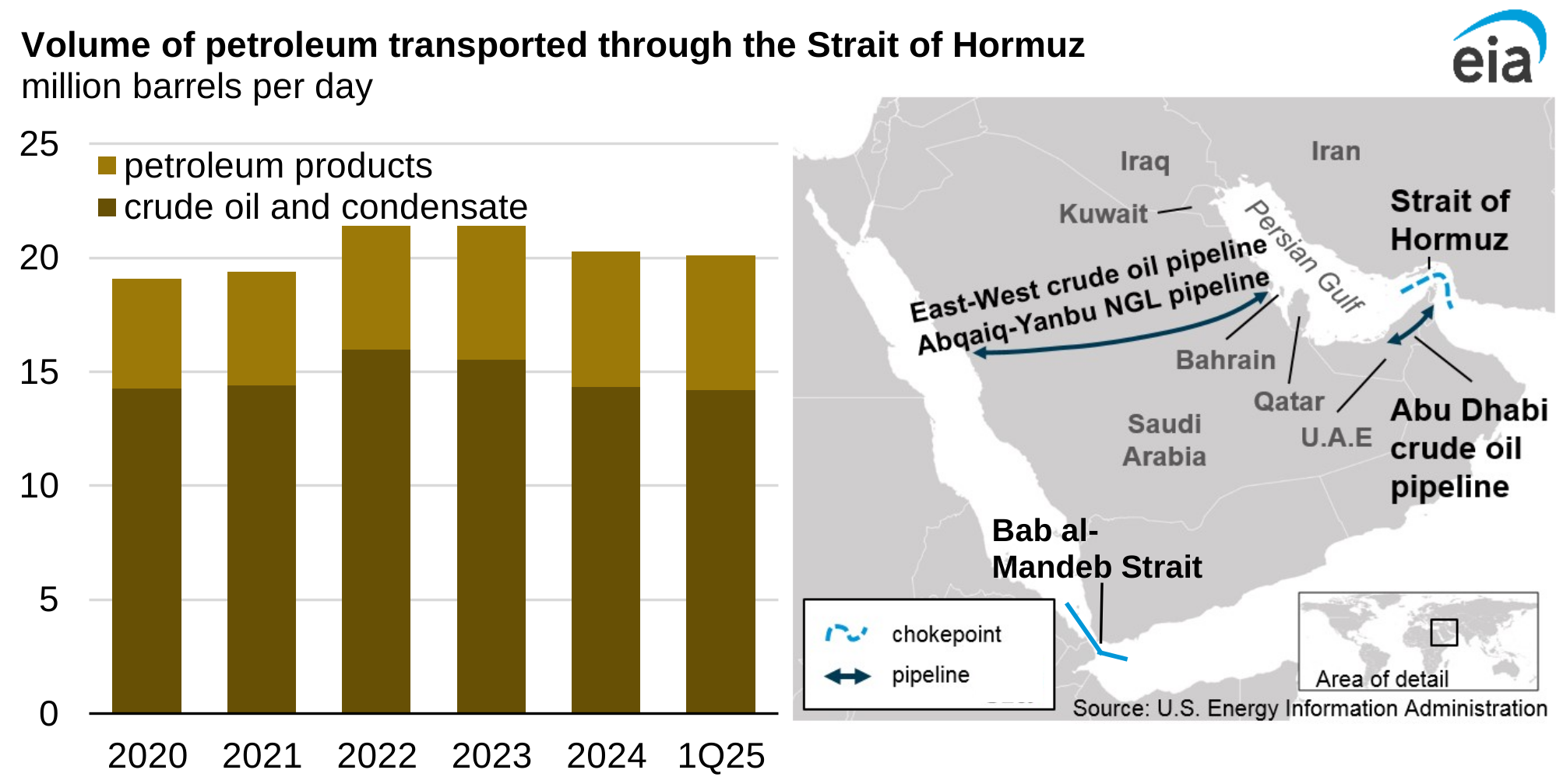
The U.S. Energy Information Administration estimates that about 20 million barrels a day moved through Hormuz in 2024—roughly 20% of global petroleum-liquids consumption and more than a quarter of seaborne oil trade. It also estimated only about 2.6 million barrels a day of unused Saudi and UAE bypass capacity at that time.
The disruption in 2026 is visible in actual flows. The International Energy Agency said Hormuz oil shipments averaged 7.6 million barrels a day in August, 13.1 million below pre-war levels. Bypass exports through Yanbu and Fujairah peaked at 7.8 million barrels a day in June but fell to 5.5 million in August after attacks, while Saudi Arabia’s East–West pipeline was shut in early September.
There are early signs of improvement: Kpler data reported on 28 September put total Middle East crude exports on track for 12.8 million barrels a day in September, the highest since the conflict began, with Hormuz flows near 7.4 million. That recovery is meaningful, but still leaves the route far below normal utilisation.
Why the shock matters beyond energy
The IEA estimates that global observed oil inventories fell by 95 million barrels in August and by 507 million barrels since February. Low buffers make additional disruptions more likely to feed quickly into crude and refined-product prices.
Higher oil can support cash flow for producers outside the disrupted region and improve margins for refiners with secure crude access. The offset is weaker economics for airlines, transport operators and energy-intensive manufacturers. For the broader market, the more important second-order effect is inflation: sustained fuel pressure can lift bond yields, delay monetary easing and compress equity valuations.
Bull and bear interpretations
Bullish for oil: renewed attacks on export infrastructure, weaker bypass capacity or a prolonged diplomatic impasse would tighten prompt supply further. The large inventory draw means the market has less ability to absorb another shock.
Bearish for oil: a verifiable agreement that restores Hormuz traffic could remove a substantial risk premium. September’s export recovery, weaker global demand and demand destruction at triple-digit prices would reinforce that downside. The IEA currently expects world oil demand to decline by 2.5 million barrels a day in 2026.
What investors should monitor next
- Daily Hormuz traffic and total Gulf exports, not diplomatic statements alone.
- Throughput at Yanbu and Fujairah and the status of Saudi Arabia’s East–West pipeline.
- Brent’s forward curve, diesel cracks and weekly inventory data for signs of immediate scarcity.
- The next U.S.–Iran talks and whether any agreement includes a timetable that can be verified in shipping data.
Sources: IEA Oil Market Report, September 2026; IEA market commentary, 18 September 2026; U.S. EIA Hormuz chokepoint analysis; market prices, negotiations and September export data reported by Reuters on 28 September 2026.