The dollar’s latest move is not simply “yen weakness.” It is a repricing of the U.S. policy path. After Federal Reserve Chair Kevin Warsh emphasized that inflation remains too high, markets lifted the implied probability of a September rate increase to 57%. The U.S. two-year Treasury yield rose to 4.33%, and USD/JPY moved back through 160.
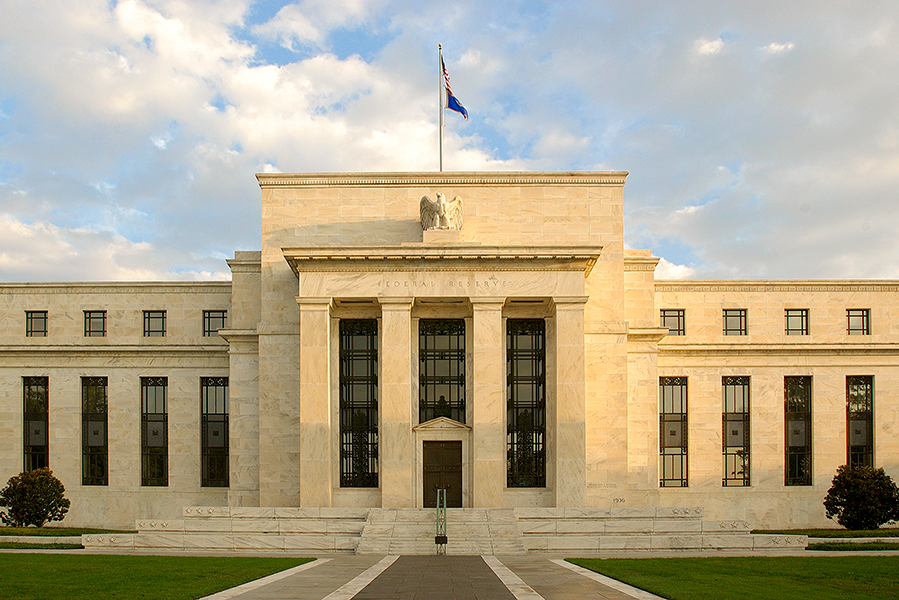
First correction: Kevin Warsh, not “Matthew Warsh”
The relevant policymaker is Kevin Warsh, who was speaking in his 100th day as Federal Reserve Chair at Jackson Hole. His message was disciplined rather than mechanically hawkish: the Fed needs confidence that underlying inflation is returning to 2%, and otherwise “has work to do.” The distinction matters. Warsh did not pre-commit to a September hike; he strengthened the reaction function around inflation data.
In his official August 28 speech, Warsh cited 12-month PCE inflation of 3.7%, a six-month measure of 4.1%, and unemployment of 4.1%. He also argued that broad financial conditions were difficult to describe as restrictive. That combination—above-target inflation, stable labor markets and easy financial conditions—explains why the market moved toward a hike.
The verified market reaction
| Indicator | Aug. 31 reading | Investor interpretation |
|---|---|---|
| USD/JPY | 160.01 | Yen back beyond the intervention-sensitive threshold |
| Dollar Index | 99.6 | Near a two-week high after a 0.6% Friday jump |
| U.S. two-year yield | 4.33% | Highest in more than a month |
| Implied September Fed hike probability | 57% | Meaningful repricing, not certainty |
| EUR/USD | 1.1591 | Confirms the dollar bid was broad, not yen-specific |
The price and rate figures are reported by Reuters on August 31. The dollar index was still on track for a second consecutive monthly decline, an important counterweight to any claim that a durable dollar bull trend is already established.
Why 160 is a policy level as much as a chart level
USD/JPY around 160 attracts attention because Japan intervened in July and because the pair has surrendered much of the yen’s post-intervention gain. Reuters reported that Japan spent a record $96.5 billion supporting the currency over the prior month. The lesson from past interventions is consistent: official buying can create violent short-term reversals, but durable yen strength usually requires the underlying rate differential to narrow.
The Bank of Japan’s July meeting summary adds another layer. Policymakers said yen depreciation was adding upward pressure to prices and described a global shift from rate cuts toward hikes. That increases the probability of eventual BOJ tightening, but timing remains critical: if the Fed reprices faster than the BOJ, USD/JPY can stay elevated even when both central banks lean hawkish.
A three-driver framework for investors
| Driver | Supports higher USD/JPY | Supports lower USD/JPY |
|---|---|---|
| U.S.-Japan front-end yield gap | U.S. yields rise faster | BOJ tightening or softer U.S. data narrows the gap |
| Official intervention | No action or only verbal warnings | Coordinated, repeated dollar selling |
| Risk regime | Orderly risk-taking and carry demand | Deleveraging that forces carry-trade unwinds |
What could reverse the move
The next U.S. payrolls report and subsequent inflation data are the immediate catalysts. A soft employment report could reduce hike odds and compress the two-year yield premium. A hot inflation print could validate Warsh’s concern and extend dollar strength. Oil is an additional transmission channel: higher crude prices can lift U.S. inflation expectations while worsening Japan’s import bill, a combination that is initially yen-negative.
Trading and portfolio implications
At 160, the distribution of outcomes is asymmetric. Carry still favors the dollar, but intervention risk raises gap risk for leveraged positions. Investors should therefore distinguish between a sound macro view and a safe trade structure. Smaller sizing, defined downside and monitoring of official statements are more important here than a single technical line.
The highest-quality bullish dollar signal would be a widening yield gap confirmed by U.S. data. The highest-quality yen signal would be a narrowing gap supported by policy action—not intervention alone. Until one of those regimes emerges, USD/JPY near 160 is better treated as an event-risk market than a simple momentum trade.
This analysis is informational and does not constitute investment advice.