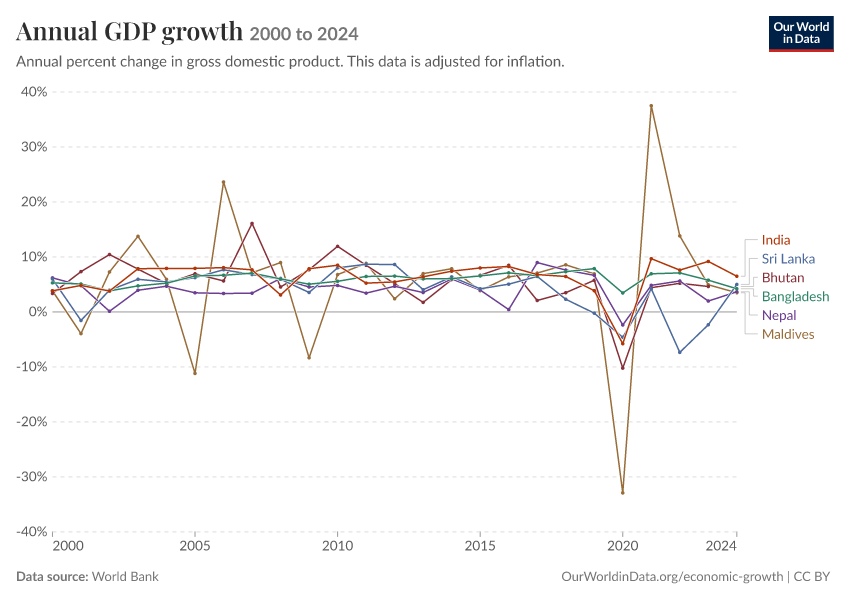
The World Bank raised its 2026 growth forecast for South Asia to 6.9%, 0.6 percentage point above its previous estimate, and expects 6.7% growth in 2027. The upgrade reflects resilient domestic demand despite higher energy costs, but it should not be read as an all-clear for regional assets.
What changed in the forecast
The World Bank expects India to grow 7.1% in fiscal 2026/27, up from its 6.6% June forecast but below the 8.6% recorded in 2025/26. The regional aggregate excluding India is far weaker: 3.6% in 2026 and 3.8% in 2027. That gap makes country and sector selection more important than the headline alone suggests.
The Bank's current South Asia group includes Bangladesh, Bhutan, India, Maldives, Nepal and Sri Lanka. Afghanistan and Pakistan were reassigned to its Middle East and North Africa grouping in July 2025, so comparisons with older regional forecasts require care.
Why the upgrade matters for investors
Faster growth supports bank credit, consumption, infrastructure demand and corporate revenue. Yet government fuel subsidies and tax cuts have delayed part of the energy shock rather than eliminated it. Prolonged support could pressure public finances; withdrawing it could lift inflation and weaken household purchasing power.
India remains the main growth engine. More broadly, tourism and agribusiness offer employment potential, while AI adoption could improve productivity. The World Bank reports that about 23% of Indian firms use AI, compared with 43% of U.S. firms, leaving room for catch-up but also execution and infrastructure risks.
Risks to the outlook
- Energy: the region is a major net oil importer, so persistently high prices can weaken currencies, margins and current accounts.
- Climate: a severe El Niño could damage harvests, lift food inflation and reduce rural demand.
- Financial conditions: a global market correction could raise funding costs and pressure stretched balance sheets.
- Concentration: strong Indian growth can mask weaker momentum elsewhere in the region.
What to monitor next
Investors should watch India's inflation and rate decisions, oil-import costs, monsoon and crop indicators, remittance trends, fiscal support measures and earnings guidance from banks, consumer companies and infrastructure suppliers.
Sources
World Bank South Asia Economic Update, October 2026; Asian Development Outlook, September 2026.