An Iranian commercial vessel was struck early on 13 September near Qeshm Island in the Strait of Hormuz, killing one crew member and wounding several others, according to Iranian state media cited by the Associated Press. The UK Maritime Trade Operations monitor separately reported a vessel hit by a projectile while transiting the strait. It was not immediately clear whether the reports described the same event, and neither the weapon nor the attacker had been independently identified.
For investors, the key point is not that a single strike has stopped Gulf exports—no new broad outage has been confirmed—but that it raises the probability of further disruption in a corridor where flows were already severely impaired. That can keep oil, refined-product, freight and war-risk insurance premiums elevated even if physical supply does not deteriorate further.
What happened—and what remains uncertain
The incident occurred off Qeshm Island, which sits at the eastern entrance to the strait. Iranian officials blamed a “terrorist enemy,” but that attribution had not been independently verified at publication. The absence of a confirmed attacker matters: escalation risk depends heavily on whether the event proves isolated, part of a wider military campaign, or a response to existing restrictions on Iranian shipping.
Investors should therefore separate confirmed facts from scenario risk. The casualty and vessel-strike reports are credible enough to warrant attention, but they do not by themselves establish a new closure, a sustained loss of export capacity or a particular government’s responsibility.
The supply backdrop is already exceptional
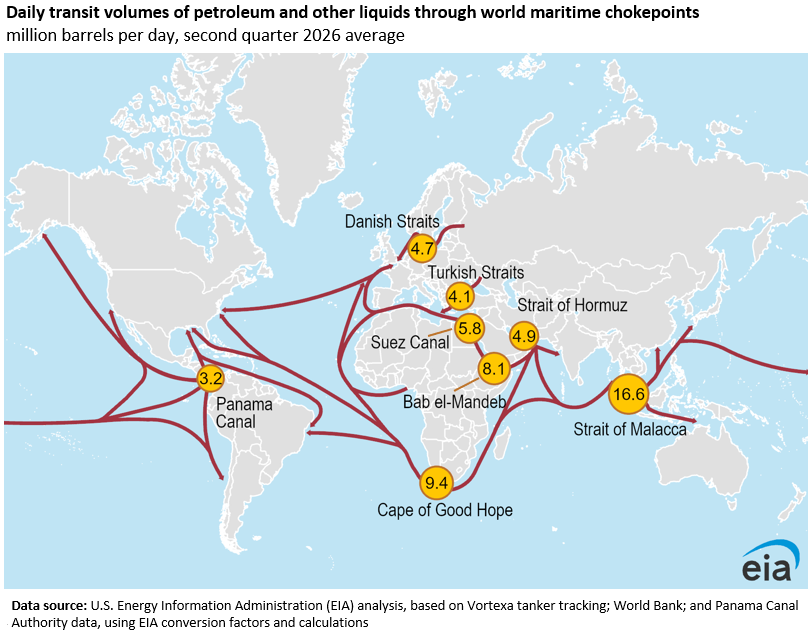
EIA estimates based on Vortexa data show total oil flows through Hormuz falling from 21.6 million barrels a day in the fourth quarter of 2025 to 4.9 million barrels a day in the second quarter of 2026. Crude and condensate flows fell from 15.9 million to 3.7 million barrels a day, while LNG flows dropped from 10.5 to 0.8 billion cubic feet a day. EIA cautions that AIS ship-tracking signals have become especially unreliable since the end of February, so these figures should be treated as estimates rather than precise real-time measurements.
| Hormuz flow | Q4 2025 | Q2 2026 |
|---|---|---|
| Total oil | 21.6 mb/d | 4.9 mb/d |
| Crude and condensate | 15.9 mb/d | 3.7 mb/d |
| LNG | 10.5 Bcf/d | 0.8 Bcf/d |
This context changes the interpretation of today’s strike. The market is not pricing a normal-flow baseline; it is pricing the durability of a partial system and the chance that remaining traffic is further constrained. Marginal disruptions can therefore have an outsized effect on prompt barrels, regional product balances and tanker availability.
Investor implications
Bullish oil case: repeated attacks, tighter naval restrictions or higher war-risk cover could reduce remaining transits and lift prompt crude and product spreads. Producers outside the Gulf, pipeline-connected exporters, tanker owners and refiners with advantaged feedstock access could benefit, although equity outcomes would still depend on costs, taxes and policy intervention.
Bearish oil case: if the strike is isolated and remaining traffic continues, part of the security premium could fade. Demand destruction, strategic-stock releases, higher non-Gulf supply or expanded use of regional pipelines would also cap prices. For airlines, chemicals, transport and energy-intensive manufacturers, sustained oil and gas costs remain a margin risk even without another physical outage.
What to monitor next
- UKMTO and naval advisories identifying the vessel, weapon and security status of the route.
- Verified tanker departures and arrivals, while allowing for gaps in AIS coverage.
- War-risk insurance, tanker freight and prompt-versus-deferred crude spreads.
- Pipeline exports that bypass Hormuz, producer guidance and any coordinated stock releases.
- Refining margins and regional product inventories, which can tighten even when crude supply appears adequate.
Sources: Associated Press, 13 September 2026; U.S. EIA Short-Term Energy Outlook, September 2026.