What happened: oil prices edged lower on 3 September after three sessions of gains. Brent fell 0.4% to about $95.26 a barrel and U.S. crude slipped 0.1% to roughly $90.84, after President Donald Trump indicated that the renewed U.S. bombing campaign against Iran may not last much longer.
Investor takeaway: the geopolitical premium is easing at the margin, not disappearing. Crude remains elevated because the conflict has already disrupted a critical supply route, depleted inventories and lifted refined-product margins. Headlines can move prices quickly, but the direction of tanker traffic and physical supply will matter more than rhetoric.
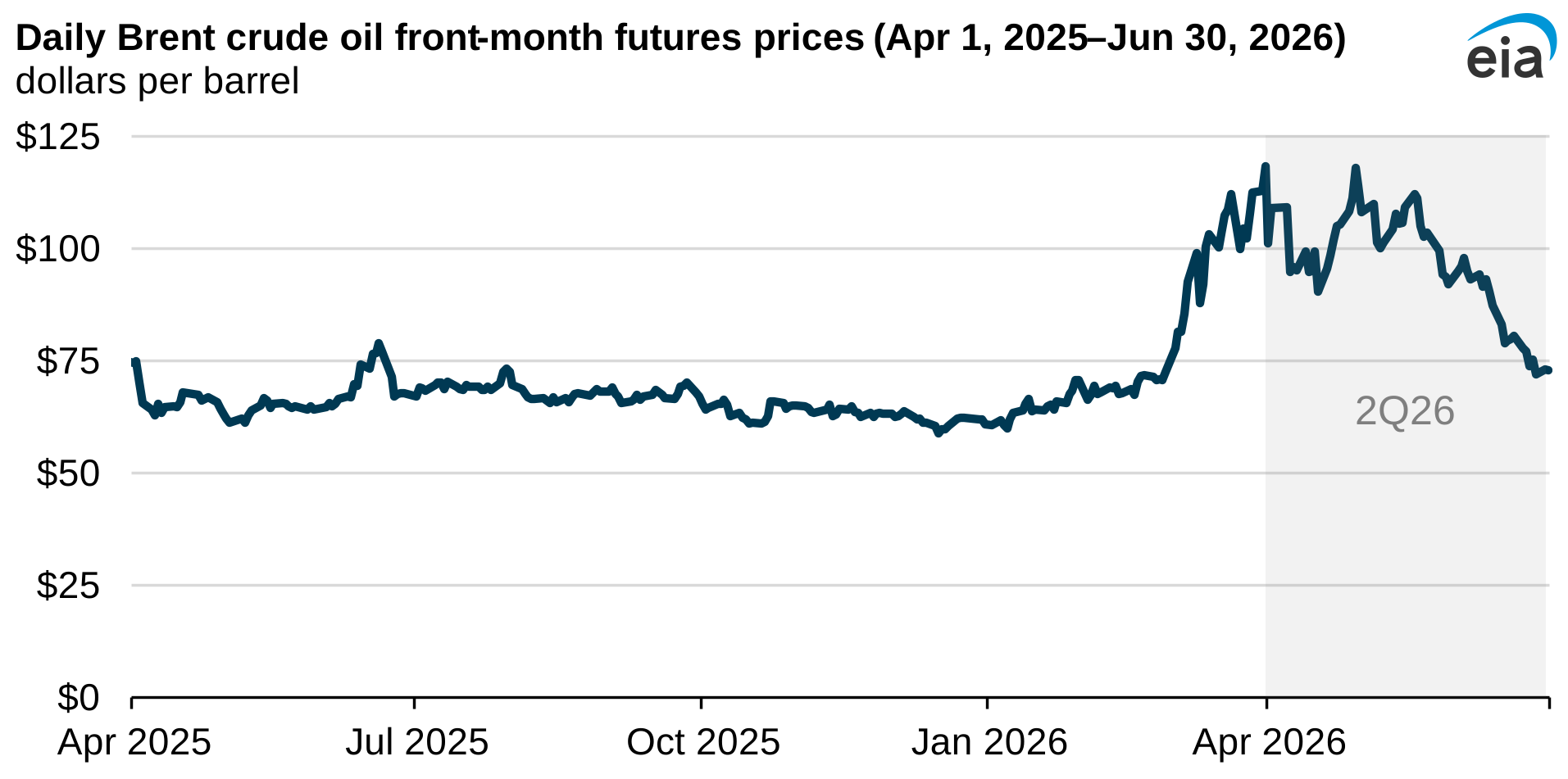
The risk premium compressed, but prices remain high
| Indicator | Latest verified reading | Investor relevance |
|---|---|---|
| Brent crude | $95.26/bbl, −0.4% | Lower on the day but still carrying a conflict premium |
| WTI crude | $90.84/bbl, −0.1% | Maintains pressure on U.S. fuel and inflation expectations |
| Hormuz oil flow | 4.9m b/d in 2Q26 | Far below 21.6m b/d in 4Q25 before the conflict |
| 2Q26 Brent range | $72–$118/bbl | Shows the scale of event-driven volatility |
The price readings were reported by the Associated Press. The physical-market context comes from the EIA's August Short-Term Energy Outlook, which estimated that Hormuz oil flows averaged only 4.9 million barrels per day in the second quarter, versus 21.6 million in the fourth quarter of 2025.
Why the physical market still matters
During April and May, the EIA calculated that Brent's average daily price swing reached about $4 a barrel, compared with $1 in the same months of 2025. Prices fell as ceasefire talks and tanker movements improved, then rose again after renewed strikes. That history argues against treating one session's decline as evidence that supply risk has normalised.
The disruption also changes sector economics. U.S. refiners processed unusually high volumes in the second quarter as tight international product supply lifted margins. The EIA estimated the gasoline crack spread was 60% above the prior-year quarter, while distillate and jet-fuel spreads more than doubled. Refiners and some producers can benefit; airlines, chemicals, road transport and energy-intensive manufacturers face higher costs and working-capital needs.
Bull case and bear case
Bullish for crude: renewed strikes, slower tanker recovery, additional production shut-ins or low commercial inventories could rebuild the premium quickly. Refined products may remain tighter than crude, preserving strong margins for complex refiners.
Bearish for crude: a short campaign, verifiable improvement in Hormuz traffic and restoration of shut-in production would shift attention back to demand and inventory rebuilding. At around $95 Brent, some geopolitical risk is already priced in.
What investors should monitor next
- Verified tanker movements through Hormuz rather than political statements alone.
- Producer restart schedules and export availability from Gulf states.
- Weekly U.S. crude and product inventories, particularly distillates and jet fuel.
- Brent time spreads: persistent backwardation would signal near-term tightness.
- Airline, chemical and transport margin guidance as fuel hedges roll forward.
The near-term oil signal is therefore mixed: headline risk has softened, but the physical system has not fully healed. Investors should expect elevated volatility until flows and inventories—not only rhetoric—confirm normalisation.